What an online university fair actually is
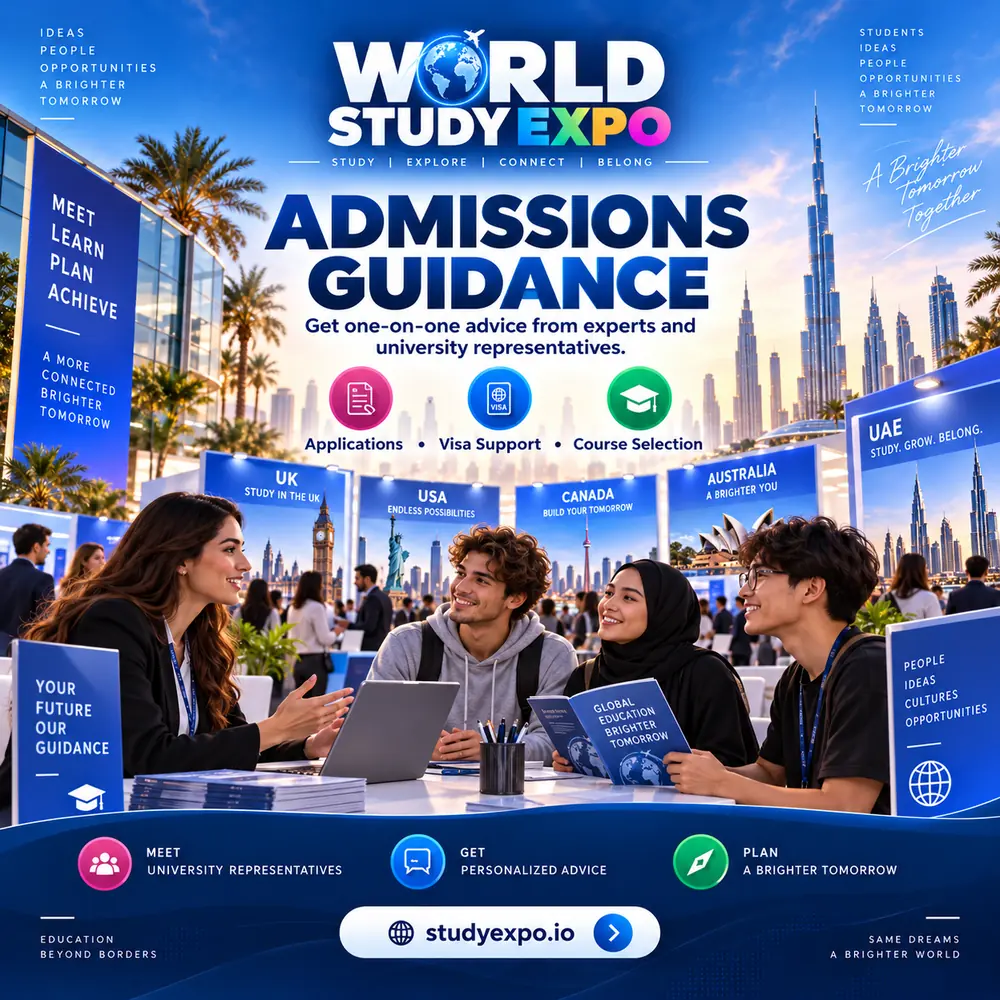
An online university fair is a scheduled event during which students meet university admissions representatives by video instead of travelling to an exhibition hall. Students register in advance, build a profile, browse institution and programme listings, shortlist the universities they want, and book one-to-one appointments from published availability. Live group presentations run alongside the individual meetings.
The important structural difference from a physical fair is that the matching happens before the event, not during it. Nobody walks past your stand.
Where virtual recruitment genuinely beats travel
Geographic reach. A recruitment trip covers three or four cities per country. An online edition covers every city in that country simultaneously. For markets like Indonesia, Saudi Arabia and India, where qualified applicants are distributed far beyond the metros, this is not a marginal difference but an order-of-magnitude one.
Cost per conversation. No flights, no accommodation, no stand build, no shipping. For small markets that could never justify a trip, virtual recruitment converts an impossible business case into a straightforward one.
Follow-up timing. Students met in person in September have results and sharper questions six weeks later. An online edition lets you have the second conversation at exactly the point it is most useful, without flying back.
Staffing flexibility. A subject specialist who could never spare a week for a recruitment trip can take four appointments from their own office.
Where face-to-face still wins
Trust builds faster in person, particularly with parents, and particularly in markets where families are cautious about sending a child overseas. A physical exhibition also produces serendipity: the student who had not considered your country until they walked past and started talking.
Counsellor relationships are also easier to build in a room. The honest position is that the two formats do different jobs, and institutions that use both outperform those committed to either alone.
The appointment model in practice
Students complete a profile that can include country, city, school, curriculum, current grade, graduation year, intended intake, study level, preferred programme, preferred destination, academic information, English test status, scholarship interest and budget range, sharing as much as they choose.
They then shortlist institutions and book from your published availability. You see what they have shared before the meeting begins, so the conversation starts at a useful point rather than at introductions.
This matters because the failure mode of physical fairs is unqualified volume. The failure mode of badly run virtual events is empty slots. Pre-event matching addresses both.
Engagement signals worth tracking
Profile views, course views, brochure downloads, wishlist additions, appointments booked, appointments completed and information requests. Each reflects a deliberate student action rather than proximity to a stand.
Wishlist additions are a particularly useful early indicator, because a student shortlisting you before the event has formed an intention without any contact from your team.
How to run one well
- Confirm early. Students shortlist and book before the event opens. Late confirmation means fewer bookings regardless of how strong your offer is.
- Build a real profile. Programme-level listings with entry requirements convert far better than an institutional overview.
- Publish enough availability. Thin availability is the commonest cause of disappointing results.
- Staff it with people who can answer. An admissions officer who can indicate competitiveness is worth three brochure handlers.
- Follow up within days. The half-life of interest after a good meeting is short.
What nobody should promise you
No platform can guarantee that appointments convert into applications, and you should be wary of any that does. Conversion depends on your programmes, entry requirements, funding and the student's circumstances, none of which an event organiser controls.
What a well-run online fair does guarantee is that the conversation is with someone who chose to have it. That is a materially better starting point than a scanned badge, and it is an honest claim.
This article is general guidance for prospective students and institutions, not immigration, financial or legal advice. Entry rules, fees, scholarships and work rights change; check official government and university sources before acting.
Recruit Students With World Study Expo
Physical exhibitions in the UAE and online recruitment across the Middle East, India and Asia. Tell us your target markets and we will send formats, availability and pricing.