
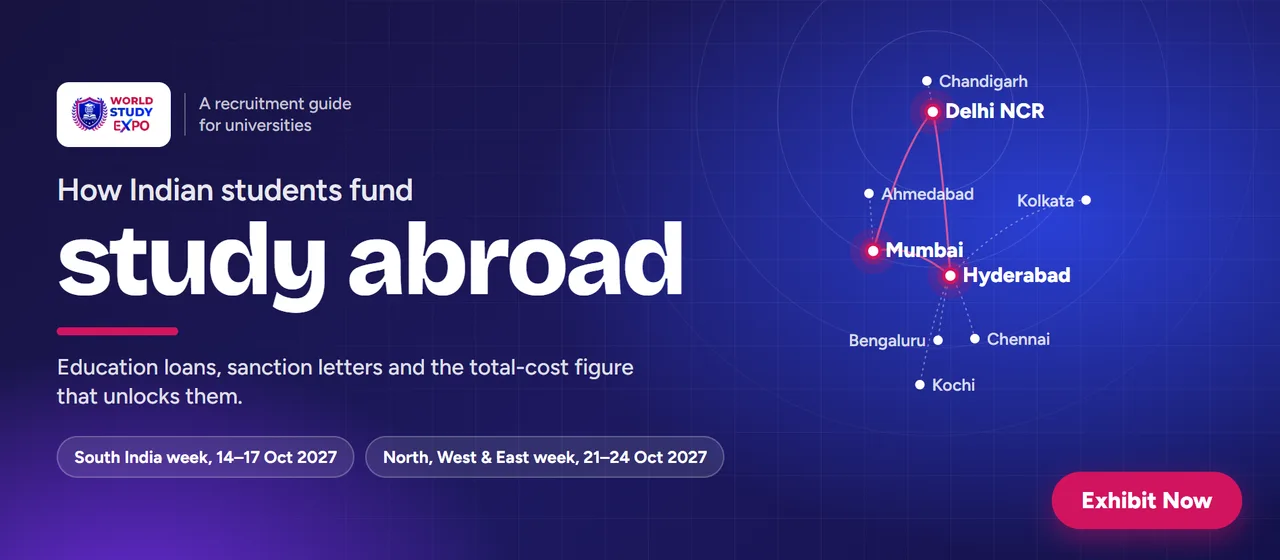
How do Indian students pay for study abroad?
Most Indian students abroad fund their studies through a mix of family savings, education loans and scholarships, with loans the largest single source for many. A lender sanctions a loan against the university’s offer letter and a total cost of attendance. Families often secure it with property or another asset. Universities that publish an accurate total-cost figure and issue lender-ready documents quickly convert more Indian offers into enrolments.
- main loan types: secured, unsecured, co-signed
- 3
- letters a university should issue fast: offer and cost of attendance
- 2
- the deciding document for many families
- Sanction
- India online weeks to meet families, Oct 2027
- 2
Why the loan decides
For a large share of Indian families, an offer of admission is only half an answer. The other half is whether a lender will fund it, and how much. A student may hold offers from four universities and enrol at the one whose loan was sanctioned first, or for the full amount. That makes the education loan one of the most important and least understood stages in recruiting from India.
Universities rarely control lending, but they control the inputs: the cost of attendance they state, how quickly they issue documents, and how clearly their deposit and refund terms are written.
Types of education loan
| Type | Typical lender | How it works | What matters to the lender |
|---|---|---|---|
| Secured loan | Public and private banks | Backed by property or deposits; larger amounts | Collateral value, total cost, co-applicant income |
| Unsecured loan | NBFCs and some private banks | No collateral; usually higher interest | University and programme profile, course, co-applicant |
| International lenders | Lenders abroad | Based on expected earnings and programme | Your institution being on their list |
Lenders offering unsecured loans often keep lists of institutions and programmes they will fund, and the terms they offer. Being on those lists makes your offer easier to accept, particularly for postgraduate STEM applicants and MBA candidates.
From offer to sanction letter
Offer
“Can you send the offer letter with the fees on it?”
Lenders need the programme, duration and tuition stated clearly.
Cost of attendance
“What is the total cost for the bank?”
Tuition plus living costs for the full programme, on letterhead or in the offer, in the format lenders expect.
Sanction
“The bank has approved. What next?”
The sanction letter often supports the visa application as proof of funds.
Disbursement
“Can the bank pay you directly?”
Lenders usually pay tuition to the university in instalments. Make your payee details and deadlines easy to follow.
What lenders need from your university
- An offer letter stating programme, duration and tuition
- An estimated total cost of attendance, including living costs
- Your bank details for direct tuition payments
- Deposit and refund terms, including if a visa is refused
- Prompt answers to lender verification emails
How to talk about cost with Indian families
The families most likely to enrol are the ones who understand the full cost early. Quote in rupees as well as your own currency. Give a single annual figure that includes living costs, not tuition alone. Name your scholarships and say whether they reduce the loan amount. Families who borrow against property are making a serious commitment. Honest employment data persuades them far more than ranking claims. That is why profiles at the India Study Expo carry total cost and outcomes up front.
Phrases that build trust
- “The total for year one, including living costs, is about ₹…”
- “We issue the cost-of-attendance letter within … working days”
- “If your visa is refused, the deposit is refunded on these terms”
- “Last year’s graduates in this programme earned a median of …”
Meeting families at the India weeks
Choose your weeks
South India, 14–17 October; North, West and East India, 21–24 October; or both.
Publish your costs
Your profile carries tuition, total cost and scholarships for families to compare.
Students register and shortlist
Each states level, subject and intake.
Appointments are booked
Families reserve video slots, often with a parent present.
Answer the cost question live
Weekend daytime sessions suit parents who hold the budget.
Follow up with documents
Send lender-ready paperwork promptly after offers are made.
Families in the north often weigh loans heavily; see the North, West and East India city guide.
Before the weeks: your preparation list
- Total annual cost of attendance in rupees and your currency
- A template cost-of-attendance letter lenders accept
- Turnaround time for offer and cost letters
- Deposit, refund and visa-refusal terms in plain words
- Scholarships that reduce the amount a family must borrow
- Graduate employment and salary data by programme
This guide is general information for institutions, not financial advice to students. Lending products, interest rates and terms vary by lender and change often.
Meet Indian Families at the India Study Expo
Tell us your programmes and the team will send formats, availability and pricing for the India weeks.